

 About Us
 Why K12?
 Safety Needs
 How Students Succeed
 FAQs
FAQs Online Elementary School
 Online Middle School
 Career and College Prep
 Online High School
 Student Clubs
 Career and College Services
 Inside the Online Classroom
 A Day in the Life
 Social & Extracurricular
 Advice, Tips & Inspiration
 Benefits for Life
 Enroll
 All School Options
 Need More Help?
STEM vs. STEAM
STEM stands for Science, Technology, Engineering, and Math. STEAM adds Arts to that mix. Both approaches focus on preparing students for careers in high-demand fields, but STEAM programs incorporate creative thinking and design alongside technical skills. K12 offers both STEM and STEAM coursework across grade levels.
What Is the Difference Between STEM and STEAM Education?
STEM and STEAM cover the same core disciplines — science, technology, engineering, and mathematics — but STEAM adds a deliberate focus on the arts, including visual design, music, and creative problem-solving. The difference isn’t just semantic.
STEM programs build technical and analytical skills, while STEAM programs train students to apply those skills in contexts that also require creativity and communication. For students drawn to fields like architecture, game design, or multimedia production, a STEAM-integrated curriculum can provide a stronger foundation. Both approaches are available through K12-powered schools, with course offerings varying by enrolled school.
What is STEM?
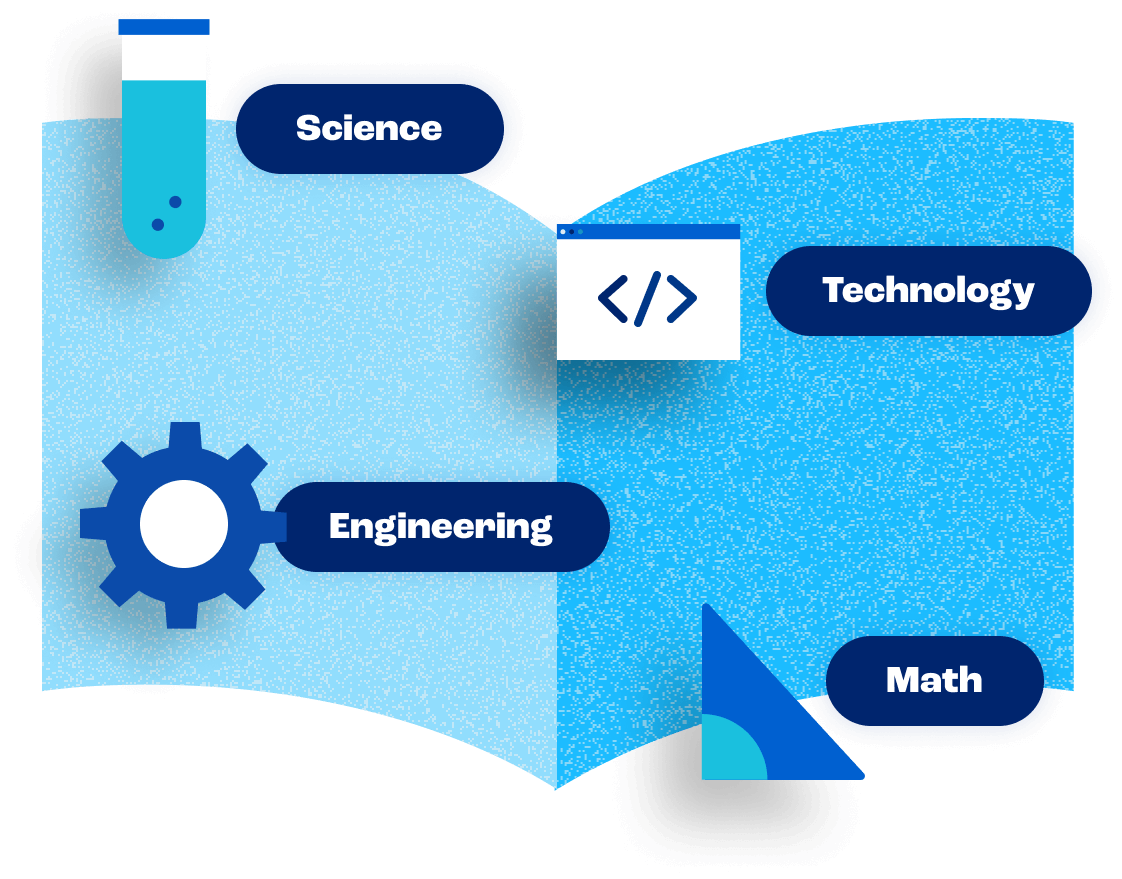
In 2001, the National Science Foundation revamped its efforts to ensure students were gaining a first-rate science and mathematics education across the country. They saw a growing need to prepare students for more success in advanced careers such as healthcare and information technology.
That’s when STEM was born.
STEM stands for Science, Technology, Engineering, and Math. STEM in the curriculum focuses on providing students with an in-depth knowledge of STEM-specific subjects through real-world learning, investigation, and evidence-based explanations.
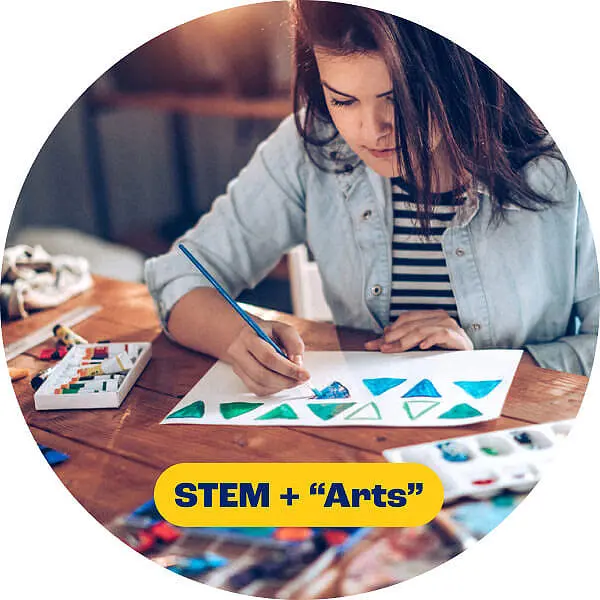
What is STEAM?
STEAM takes STEM education a step further by integrating “Arts” into the acronym, encompassing language arts, drama, graphic design, visual arts, music, and new media.
The extra “A” expands the initial focus on hands-on investigation to include process-driven inquiry, design, and creativity. STEAM also emphasizes valuable soft skills like communication, collaboration, and innovation.
STEM vs. STEAM
Let’s take a closer look at the similarities and differences between STEM vs. STEAM.
| The Similarities | The Differences |
|---|---|
| STEM and STEAM are both standards-based educational approaches to a rigorous, integrated math and science curriculum. | STEAM is an access point for inquiry, dialogue, and critical thinking. |
| Both push students to engage in inquiry-based thinking and problem-solving through process-based learning. | STEM focuses on real-world learning through investigations, problem-solving, and evidence-based explanations. |
| Both address multiple content areas, including literacy and social sciences. | STEAM has a process-driven focus and requires the use of soft skills in addition to academic knowledge. |
| STEM focuses on developing deep content knowledge and higher-level thinking through hands-on experiences. |
What Does STEM vs. STEAM Look Like in the Classroom?
In a STEM classroom, students tackle problems using data, logic, and structured experimentation. In a STEAM classroom, those same problems are approached with an added layer of creative thinking and collaboration. The content often overlaps — what changes is how students are asked to engage with it. A STEM lesson on meteorology might have students analyze weather data and draw conclusions.
A STEAM version of the same lesson could ask a small team to design, build, and launch a weather balloon, requiring students to communicate ideas, divide responsibilities, and apply both scientific knowledge and creative problem-solving to reach a shared goal. That shift from individual analysis to collaborative design is where STEM and STEAM diverge most clearly in practice.
| Traditional Science Lesson | STEM Lesson |
|---|---|
| Reading a chapter on meteorology from the textbook | Observing and recording data from a weather balloon |
| Discussing the concepts with classmates | Using the data to calculate measurements such as atmospheric pressure and distance traveled |
| Completing a worksheet | Concluding how variables like wind speed, weather, and balloon size might create different outcomes |
What Are the Benefits of STEM and STEAM Education for Students?

STEM and STEAM education shift the focus from memorizing facts to applying knowledge — skills like problem-solving, collaboration, and critical thinking that translate directly to the workforce. According to the U.S. Bureau of Labor Statistics, STEM occupations are projected to grow faster than average through 2033, making early exposure to these disciplines a practical investment in a student’s future.
STEAM builds on that foundation by adding creative and communication skills that are increasingly valued across industries — from healthcare and engineering to media and design. The two approaches aren’t competing frameworks.

What STEM Programs and Courses Does K12 Offer?
K12-powered schools offer STEM and STEAM coursework across all grade levels, from introductory science and math in elementary school through advanced courses in biology, chemistry, physics, calculus, and computer science in high school.
AP STEM courses are available at select schools for students seeking college-level rigor. Beyond core coursework, students can participate in STEM-focused extracurricular activities including robotics competitions, the K12 Innovation Challenge, and career exploration electives in fields like engineering, information technology, and health sciences. The Technology Student Association (TSA) is available at select K12-powered schools, giving middle and high school students access to national STEM competitions and leadership opportunities.
Where Can I Learn More About STEM and STEAM Education?
The K12 blog and resource library cover a range of STEM and STEAM topics, from explaining core concepts to helping families evaluate school programs and career pathways. For families ready to explore enrollment, the school finder at k12.com allows you to browse K12-powered schools by state and filter by program offerings.



Frequently Asked Questions
STEM focuses on science, technology, engineering, and math, while STEAM adds the arts. This approach encourages both critical thinking and creativity.
By combining technical subjects with creativity, STEAM helps students think in new ways and solve problems more effectively. These skills are valuable in many career paths.
Both STEM and STEAM offer strong learning opportunities. The best choice depends on your student’s interests and how they learn best.